
Conference Room B: Where Inside the Commercial Real Estate Credit Room Began
The conference room across the hall from my office helped shape how I think about commercial real estate credit, portfolio risk, lending discipline, and the decisions institutions make before the numbers tell the whole story.
Derek P. Pollard | LakeRock Capital
Conference Room B
Across the Hall from Conference Room B
For more than a decade, the door to Conference Room B was directly across the hall from my office on the 31st floor of SunTrust, now Truist, Tower in Atlanta.
If my office door was open, I could see people coming and going.
At the time, I never thought much about the geography of it. My office was on one side of the hallway. Conference Room B was on the other.
Looking back, however, that hallway gave me a remarkable vantage point.
A lot happened inside that room.
Commercial real estate transactions were discussed. Portfolio strategies were debated. Emerging risks were surfaced. Problems were worked through. Production and credit executives challenged one another. Credit policy and underwriting criteria were debated. Decisions were made about where the bank should continue lending, where it should become more selective, and where risk had begun to shift.
I was an active participant in most of those discussions, even when commercial real estate was not involved.
But some of the most important lessons did not come from formal presentations or scheduled meetings. They came from watching patterns develop over time: hearing the same issue surface in different transactions, seeing a routine credit question become a portfolio concern, or continuing a conversation in the hallway after everyone else had left the room.
Over enough years, you begin to recognize something important.
Credit Room Principle
Risk often becomes visible before it becomes measurable.
That does not mean intuition should replace analysis. Quite the opposite. Experienced judgment and disciplined analysis need to work together. The numbers matter enormously, but sometimes they confirm a question that experienced people have already learned to ask.
Years later, when I began developing Inside the Commercial Real Estate Credit Room, I realized that Conference Room B was its inspiration.
The series is not really about a conference room.
It is about what happens inside the room where consequential commercial real estate decisions are made.

A Conversation Outside Conference Room B
One Sentence Changed the Conversation.
“Derek, we have too much land.”
Warren “Woody” Woodring, EVP, Chief Wholesale Risk Officer
We had just finished one of our regular meetings when Woody stopped me outside Conference Room B and delivered that message.
I had already been thinking about the bank's acquisition and development exposure. Woody's observation did something important: it elevated an existing concern into an institutional question that required action.
We were talking about raw land, lot loans, and development land. Those assets can perform very well while values are rising, absorption is strong, and development assumptions continue to hold.
But land is unforgiving when conditions change.
There is little or no operating cash flow to fall back on. Carry costs continue. Absorption can slow quickly. Values can move sharply. Refinancing alternatives can disappear at exactly the wrong time.
Production Had a Different View
Woody wanted the concern carried to Bill Serravezza, who led commercial real estate production and with whom I met regularly.
Bill pushed back at first.
And that pushback was not unreasonable.
From the production side, the market still appeared strong. Internal performance remained solid. Profitability was attractive. And the information visible at the time still supported continued activity.
I understood Bill's perspective. But I also understood Woody's concern.
The question was not whether the current quarter still looked good. The question was whether the portfolio was becoming too exposed to a risk that could change quickly if market conditions turned.
So We Put the Portfolio Under a Microscope
Rather than respond with a blanket decision, we reviewed the relationships across the land and acquisition-and-development portfolio.
We looked at the borrowers, the projects, the exposure, the quality of the relationships, and whether each relationship still fit the risk posture we wanted going forward.
In effect, we stratified the portfolio.
01
Keep
Relationships we believed remained strategically important and creditworthy enough to continue supporting.
02
Further Consider
Relationships requiring additional review, closer monitoring, or a more selective approach before adding exposure.
03
Reduce or Exit
Exposures that no longer fit the portfolio position we wanted to carry into the next phase of the cycle.
From Signal to Action
The warning triggered review. The review produced segmentation. The segmentation gave us a disciplined basis for action.
Some relationships still made sense. Some required closer review. Others no longer fit the risk posture the bank wanted going forward.
That process allowed us to begin retrenching from land exposure while the broader market still appeared strong, before deteriorating conditions made those decisions far more difficult.
Looking back, I believe that early action helped the bank avoid significant losses because we did not wait for the market to force the decision.
I would not try to attach false precision to the outcome. What matters more is the sequence: an experienced risk executive recognized a growing concentration, production challenged the conclusion, the organization tested the concern against the portfolio, and then we acted.
The lesson was not simply that the warning proved important. The lesson was that strong institutions need both the warning and a disciplined process for turning that warning into action.
The Lesson Stayed With Me
Good risk management is not anti-growth.
It is knowing when growth has begun to change the institution's risk position and having a process for acting before the market makes the decision for you.
That experience also reinforced something else: production and risk are not opposing teams. The strongest institutions need both.
Growth and Guardrails
The Strongest Decisions Needed Both Sides of the Table
Sustainable growth requires both production discipline and risk discipline.
The land discussion was a good example of how that relationship was supposed to work.
Production understood the borrowers, the opportunities, the competitive environment, and what was happening in the market. Risk brought a different perspective: concentration, downside exposure, portfolio consequences, and what could happen if conditions changed.
Neither perspective was sufficient by itself.
The strongest decisions came when both were brought into the room.
The better question was not simply whether to lend. It was where and how to keep lending.
- Where are concentrations increasing?
- Where is pricing no longer compensating for risk?
- Where has leverage become too aggressive?
- Where are sponsors becoming stretched?
- Where should the institution continue to grow, and where should it become more selective?
Those were not purely risk-management questions. They were strategic questions about where the institution should deploy capital, how it should price risk, and how it could continue growing without allowing today's production decisions to become tomorrow's portfolio problem.
Banks are in the business of taking risk. The objective is not to eliminate it. The objective is to understand it, price it appropriately, structure it intelligently, and recognize when the institution's position has changed.
But those discussions were only as useful as the information we could bring into the room. At the time, getting that information together was often harder than it sounds today.
The Information Problem
The Data Existed. Getting It to the Decision-Maker Was the Hard Part.
The information environment was very different then.
Market information did not move with anything close to today's speed. Some data lagged for months. Information needed for a decision might sit across different systems, spreadsheets, reports, models, and people.
Prime rates. Treasury yields. Funding benchmarks. Portfolio information. Credit model inputs. Economic releases. Property information. Market data.
The information often existed, but it lived in different places and arrived at different times. Gathering it could be cumbersome.
More information is not the same as better decision intelligence.
Decision Intelligence Lesson
The challenge was getting the right information, in the right form, to the right person before the decision was made.
That experience still influences how I think about information today.
Faster data is useful. More data can be useful. But neither automatically produces a better commercial real estate decision.
What matters is whether the information helps someone recognize what changed, understand why it matters, and determine what action may be required.
What has changed that should matter to someone making a CRE decision this week?
That question is part of what sits behind LakeRock's Weekly Rate & Capital Markets Signal.
The same discipline informs the CRE Property & Construction Cost Monitor and the Executive CRE Briefing: not simply reporting data, but translating what changed into implications for underwriting, refinancing, valuation, and portfolio risk.
In many ways, these LakeRock tools are modern versions of the decision-useful information I would have wanted available before walking into Conference Room B.
Teaching the Judgment
When Conference Room B Became a Classroom
Conference Room B eventually became important to me for another reason. It became a place where experienced credit judgment could be shared across the franchise.
Through the CRE Senior Credit Officer Learning Series, we would select a practical CRE topic each month, identify an experienced presenter, distribute a deck, and use an interview format to draw out the judgment behind the material.
How the SCO Learning Series Worked
The technology was simple. The objective was not.
01
Select the Topic
Identify a practical CRE credit issue, such as valuation, underwriting, documentation, or portfolio risk.
02
Find the Experience
Bring in someone who understood the subject through real transactions, decisions, and market experience.
03
Send the Material
Distribute the meeting invitation and presentation deck to the appropriate participants across the franchise.
04
Interview the Presenter
Rather than simply hand the meeting to a speaker, I would interview the presenter and use the deck to guide the discussion.
The technology was crude by today's standards. The learning model was not.
First Friday of Every Month
The SCO Learning Series regularly drew 150+ participants from across the franchise and became one of our most popular CRE learning forums.
I think part of its popularity came from the format.
It was not simply someone reading a presentation. The interview format allowed us to slow down on the issues that mattered, ask follow-up questions, challenge assumptions, and draw out the experience behind the slides.
Today, technology makes that kind of knowledge transfer far easier. Video allows people to see the presenter, share screens, review models and exhibits together, record discussions, and reach an audience almost anywhere.
But the underlying challenge has not changed.
The Lesson
The formulas are teachable. The judgment takes longer.
Commercial real estate is difficult to learn from a manual alone.
Someone can learn how to calculate DSCR fairly quickly. Understanding why a 1.30x DSCR may be strong in one transaction and misleading in another is different.
Someone can read a guarantee. Understanding whether the guarantor provides meaningful support requires more than finding a signature page.
That kind of judgment develops through repetition, discussion, challenged assumptions, and exposure to experienced people.
The move from Conference Room B to Conference Room A was more than a logistics change. It was evidence that people wanted practical access to experienced judgment.
Eventually, the ideas outgrew Conference Room B.
01
Conference Room B
CRE Senior Credit Officer Learning Series
A recurring first-Friday forum connecting experienced CRE practitioners with credit officers and other participants across the franchise.
02
Conference Room A
The Audience Expands
Participation grew beyond what Conference Room B could comfortably support, and the learning sessions moved into the larger Conference Room A.
Credit Room Principle 03
Institutional knowledge should not remain trapped inside the heads of a few experienced people.
It should be transferred, debated, documented, and embedded into how the organization makes decisions.
The Series
Why I Created Inside the Commercial Real Estate Credit Room
That belief in transferring institutional knowledge became part of the foundation for Inside the Commercial Real Estate Credit Room.
The series is not simply about teaching formulas. It is about making the reasoning, tradeoffs, and experienced judgment behind commercial real estate decisions more visible and more accessible.
The more difficult questions begin after the numbers are on the page.
- What does the experienced lender notice?
- Where does the credit officer question the assumptions?
- What happens when production and credit disagree?
- What do experienced people do before a problem reaches a formal watchlist?
That is the real credit room.
The numbers get you into the conversation.
Judgment determines what happens next.
Credit Room Principle 04
The numbers get you into the conversation. Judgment determines what happens next.
What began as knowledge transfer inside Conference Room B eventually became a broader LakeRock operating principle: experienced judgment should be made more accessible, more structured, and more useful before the decision is made.
From Experience to Decision Intelligence
How Those Lessons Show Up in LakeRock Today
The lessons of Conference Room B did not lead to a single product. They became a way of thinking about commercial real estate decisions.
Looking at LakeRock today, I can see that same discipline expressed in several different ways.
LakeRock is increasingly built around a common decision architecture: gather the right information, organize it, identify what is missing, connect transaction and portfolio context, and apply experienced judgment before action is taken.
The Connection
Different capabilities. Different audiences. The same underlying objective: better information and stronger judgment before the decision.
Each capability addresses a different point in the same decision chain.
01
The Foundation
Where the perspective was formed
Years of transaction discussions, portfolio reviews, credit debates, market cycles, and conversations with experienced lenders and risk executives shaped how I think about commercial real estate decisions.
02
Inside the Commercial Real Estate Credit Room
Making experienced CRE judgment more accessible
The Credit Room series makes the reasoning, tradeoffs, and judgment behind CRE decisions more visible by showing what happens after the calculations are complete and the harder questions begin.
03
Market & CRE Decision Intelligence
Translating market signals into CRE implications
Converts rates, spreads, construction costs, market conditions, and credit stress into implications for underwriting, refinancing, valuation, portfolio risk, and capital decisions.
04
Bank Decision Intelligence
Seeing risk at the portfolio and institutional level
The Bank Decision Intelligence Engine extends the analysis beyond the individual transaction to concentration, growth, risk migration, maturity exposure, lending capacity, and the broader institutional context surrounding CRE decisions.
05
UnderwriteIQ and LakeRock Decision Platforms
Improving the information that reaches the decision-maker
Before experienced judgment can begin, the information has to be collected, organized, checked, and made usable. Technology should improve that process, surface missing information, preserve provenance, and reduce friction. It should support experienced judgment, not replace it.
The Common Discipline
Get the right information into the room, understand what is missing, and apply experienced judgment before the decision is made.
These capabilities serve different purposes, but I do not see them as disconnected projects.
They are different expressions of lessons that became familiar years ago: transaction risk cannot be separated from market conditions, portfolio context matters, information quality matters, and better decisions usually begin with better questions.
What Has Not Changed
Different tools. Different decisions. One discipline.
The technology has changed considerably. The discipline behind the decision has not.
Full Circle
Conference Room B Was Where My Journey at the Bank Began
Long before I understood how important Conference Room B would become to my career, it was where the bank vetted me for the job.
Warren “Woody” Woodring interviewed me there. Mark Flynn, who headed Loan Review, interviewed me there. Bill Serravezza interviewed me there. Dev Strischek ultimately hired me and became my direct manager, and over the years Dev and I would spend many days together in Conference Room B.
And over the years, many of us would return to that room to participate in important decisions together.
Conference Room B came to occupy a prominent place in commercial real estate lending, credit, and risk decision-making within Southeastern U.S. banking.
At the time, those were simply interviews, meetings, portfolio reviews, credit discussions, and decisions.
Looking back, I see something more.
I was fortunate to spend those years around some of the best commercial real estate lending, credit, and risk minds in the country. I learned from people who had worked through transactions, markets, credit cycles, portfolio problems, and institutional decisions that no textbook could fully replicate.
Some of that knowledge came through formal discussions. Some came through disagreement. Some came from watching experienced people work through a difficult problem. And some came through conversations that continued after the meeting was supposed to be over.
What I Carried Forward
Knowledge transfer was happening to me long before I began thinking about how to transfer that knowledge to others.
Woody, Mark, Bill, Dev, and many others invested their experience in me. I am grateful to each of them for what they taught me and for the opportunities they gave me to participate in consequential decisions.
Much of what I later tried to teach, institutionalize, and ultimately carry forward through LakeRock began with that knowledge transfer.
Years later, I can see a direct line from those experiences to Inside the Commercial Real Estate Credit Room, the SCO Learning Series, LakeRock's decision-intelligence work, and the platforms I am building today.
The technology is different. The tools are different. The speed and availability of information are dramatically different.
But one thing has not changed.
Experienced judgment still has to be developed, challenged, shared, and passed forward.
And knowledge transfer should not move in only one direction.
I received a great deal from the people who walked into Conference Room B over those years. Their experience shaped how I thought about transactions, portfolios, risk, lending, leadership, and eventually how I tried to teach and develop others.
I hope I gave something back to that room as well.
Over the years, I entered Conference Room B in different roles—as a colleague, a credit executive, a risk partner, a teacher, and sometimes simply as someone trying to help work through a difficult decision.
I brought my own experience into those conversations, challenged assumptions when I believed they needed challenging, shared what I had learned, and tried to help others develop the judgment that so many people had helped develop in me.
That is difficult to measure. But perhaps that is how institutional knowledge is supposed to work. Someone invests experience in you. You add your own. And then you pass it forward.
The Room Across the Hall
Conference Room B was where the bank first evaluated whether I belonged in the room. Years later, I realize it was also one of the places that taught me what to do once I got there.
And that may be the most important lesson I carried out of Conference Room B.

Looking Back
I hope that, over time, I gave back to Conference Room B as much as I received from it.
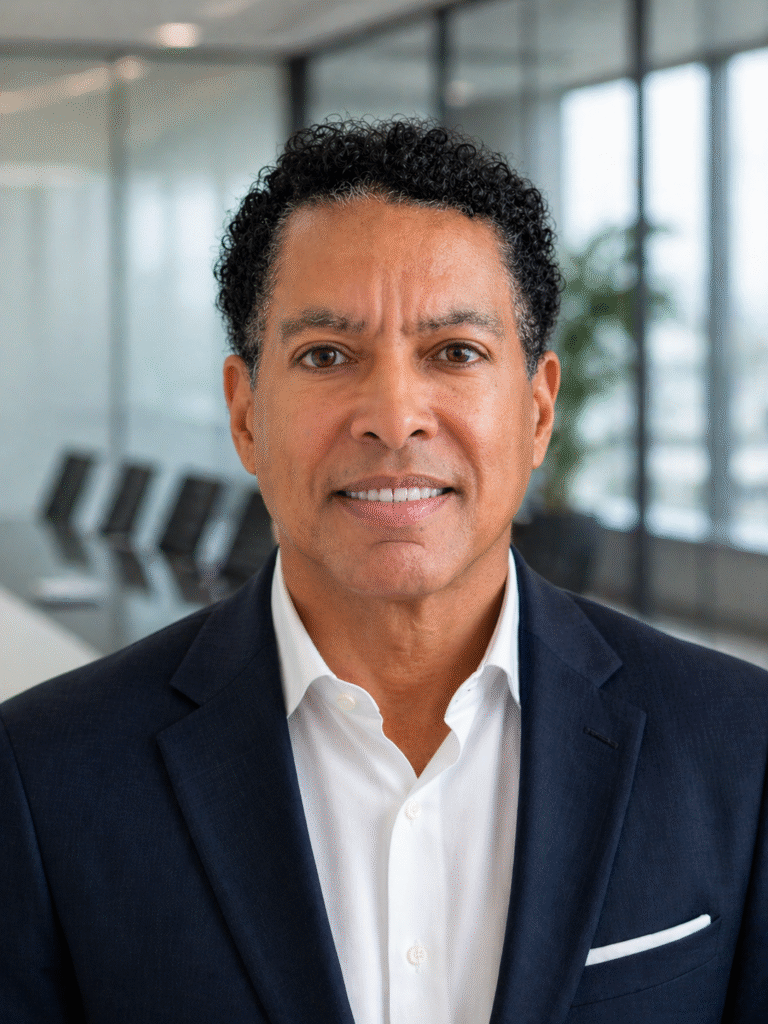
Founder, LakeRock Capital
Former Enterprise CRE Credit Risk Executive · CRE Lender · Federal Reserve Examiner
Derek P. Pollard is the Founder and Managing Partner of LakeRock Capital. A former enterprise commercial real estate credit risk executive, CRE lender, and Federal Reserve examiner, his career spans CRE lending, underwriting, portfolio risk, credit policy, workout, capital structure, and institutional risk management. His work at LakeRock focuses on bringing experienced judgment, better information, and stronger decision structure to commercial real estate.
About
LakeRock Capital
LakeRock Capital helps banks, lenders, investors, developers, and sponsors make stronger commercial real estate decisions by connecting market intelligence, disciplined underwriting, portfolio perspective, and experienced judgment.
Our work is grounded in a simple principle: better information, stronger structure, and sound judgment lead to more defensible decisions and more sustainable growth.