LakeRock Capital

UnderwriteIQ™ by LakeRock Capital

From CRE Loan Intake to Ready for Underwriting

Bring structure and control to CRE document collection and review. Track requirements, resolve document issues, and prepare an indexed, version-controlled package for handoff to your institution’s electronic credit file.

Phase I supports administrative readiness. Credit analysis and lending decisions remain with your team.

Clear requirements. Controlled workflow. Confident handoff.

Human credit judgment remains central.

What UnderwriteIQ™ Does

An Organized Path to Underwriting

CRE file preparation often means chasing documents, reconciling versions, and determining what still needs attention. UnderwriteIQ brings that work into one controlled workflow.

01 Transaction-Specific Intake

Organize borrower, sponsor, and property information, with document requirements tailored to the transaction type, property type, and borrower structure, including refinance, acquisition, and construction transactions.

02 Document Review & Control

Track document receipt, review, corrections, and verification. Maintain version history and keep outstanding requirements and documented exceptions visible.

03 Human-Confirmed Readiness and Handoff

An authorized reviewer confirms administrative readiness for underwriting. Prepare an organized, indexed, version-controlled document package for handoff to the institution’s electronic credit file.

UnderwriteIQ Phase 1

See How a CRE File Takes Shape

Two workflow examples show how transaction details establish the intake context and help clarify which documents to request.

Screen 01 · Intake context

Deal and Property

Transaction type, property details, loan purpose, and requested amount establish the context for the file and help determine the applicable document requirements.
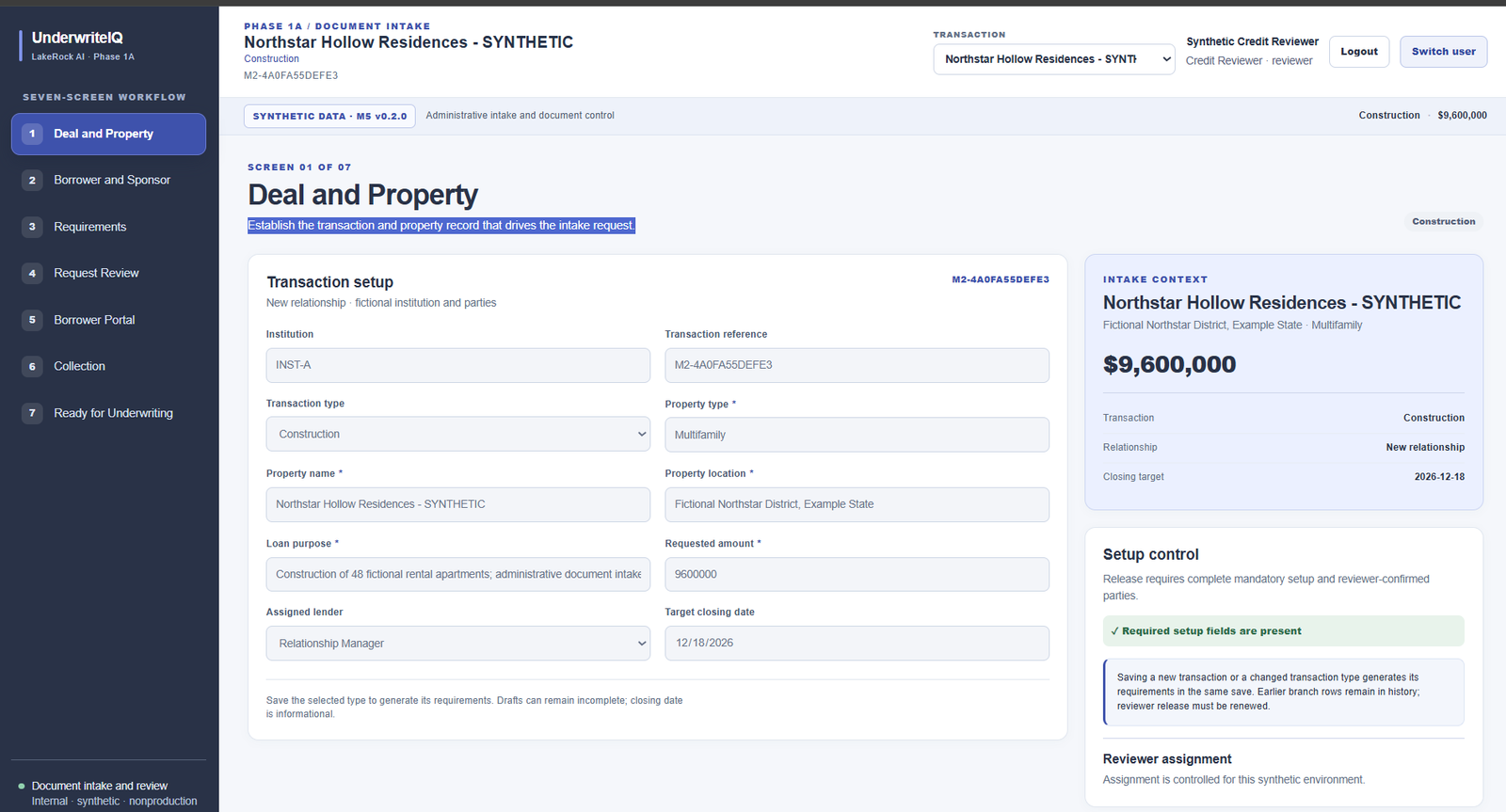

UnderwriteIQ Deal and Property intake screen
Screen 01 · Select the image to view it at full size.
Screen 03 · Document requirements

Transaction-Specific Requirements

This construction example organizes document requirements by stage and applicability, with the responsible party, current review status, and source version visible. Teams can see what evidence belongs in the file and how it is being tracked.
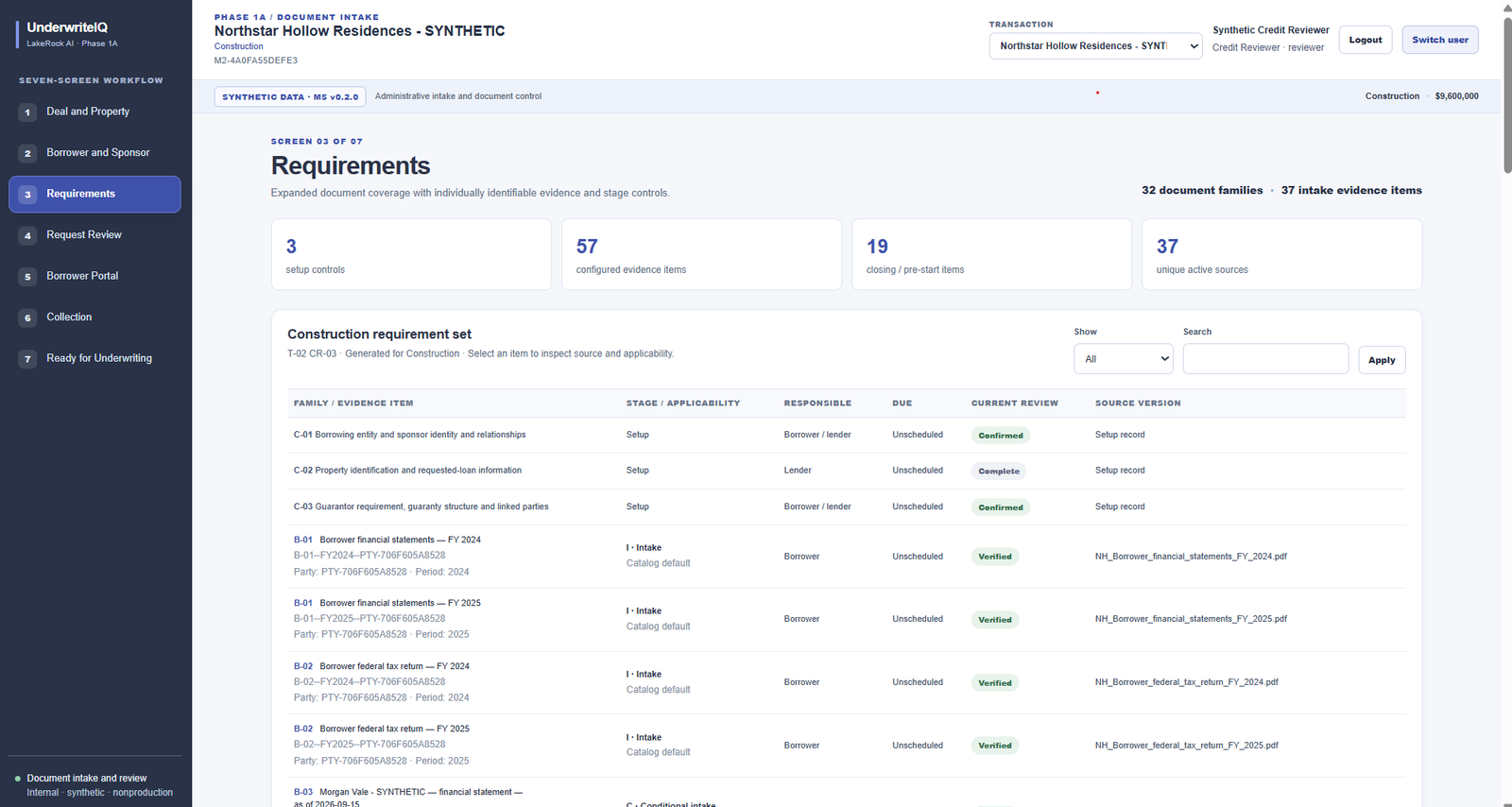
UnderwriteIQ Transaction-Specific Requirements screen with synthetic demonstration data
Screen 03 · Select the image to view it at full size.

Screens shown use synthetic demonstration data. Phase 1 supports administrative file readiness, not credit analysis, a credit decision, or loan approval. Any “Ready” designation requires human reviewer confirmation.

HUMAN JUDGMENT AND CONTROL

The Platform Supports the Process. Your Team Owns the Decision.

UnderwriteIQ™ organizes intake, document review, and administrative readiness. It gives your team a clearer file to work from without replacing underwriting analysis, institutional policy, or approval authority.

"Ready for Underwriting” means an authorized reviewer has confirmed administrative readiness. It does not mean the loan is approved.

Credit Decisions Stay With Your Institution

UnderwriteIQ does not approve or decline loans. Underwriting conclusions, risk ratings, and lending decisions remain with authorized personnel.

Readiness Requires Human Confirmation

An authorized reviewer confirms readiness after reviewing required evidence and the disposition of outstanding items and exceptions.

Policy and Accountability Remain Central

The workflow supports documentation discipline and traceability. It does not override institutional policy, delegated authority, or committee review.

Phase 1 Workflow

Seven Screens. One Controlled Path to Underwriting.

UnderwriteIQ™ organizes transaction setup, document collection, and review into a controlled workflow that ends with human-confirmed administrative readiness and preparation of a credit-file handoff package.

  1. Deal and Property

    Establish the transaction type, property, loan purpose, requested amount, and intake context.

  2. Borrower and Sponsor

    Identify the borrowing entity, sponsors, guarantors, and ownership relationships relevant to the file.

  3. Requirements

    Identify applicable documents for refinance, acquisition, or construction transactions.

  4. Request Review

    Review setup and document requirements before releasing requests to the borrower.

  5. Borrower Portal

    Give borrowers a clear place to view requests, submit documents, and provide replacements when needed.

  6. Collection

    Track received documents, current versions, review status, missing items, and exception dispositions.

  7. Ready for Underwriting

    An authorized reviewer confirms administrative readiness. The accepted document set and supporting review record are prepared for a controlled credit-file handoff.

    Readiness is an administrative checkpoint, not credit approval.

Why the Front End Matters

Better-Prepared Files. A Clearer Starting Point for Underwriting.

UnderwriteIQ™ is designed to reduce avoidable friction before credit analysis begins, helping lending and credit teams work from a more organized, traceable file.

  • Surface Gaps Earlier

    Make missing documents and unresolved requirements visible before the file moves into underwriting.

  • Reduce Avoidable Rework

    Keep requests, current document versions, and review issues together to support more focused follow-up.

  • Make Handoffs More Consistent

    Use a defined readiness checkpoint and an organized document package to support the transition from intake to underwriting.

  • Preserve the Review Record

    Keep document versions, review outcomes, and exception dispositions traceable alongside the file.

Stronger preparation supports underwriting. It does not replace credit analysis or guarantee a lending outcome.

Who It Supports

Designed for the Teams Preparing CRE Files for Underwriting

UnderwriteIQ is being developed for bank teams responsible for assembling, reviewing, and handing off CRE documentation. It brings structure to file preparation while preserving the institution’s credit policies and decision authority.

CRE Lenders and Relationship Managers

Establish transaction details and coordinate borrower documentation against clear requirements.

Credit Administration and Intake Teams

Track document receipt, versions, outstanding items, and corrections within a controlled workflow.

Credit Review and Readiness Teams

Review the assembled documentation and confirm administrative readiness before the file moves into underwriting.

We also welcome discussions with technology and advisory organizations interested in supporting disciplined CRE document workflows.

Engagement Pathway

Start Narrow. Map the Workflow. Scope the Pilot.

Begin with your institution’s current CRE document workflow: how requirements are established, how documents are collected and reviewed, and where file preparation slows down.

The goal is a focused starting point, with clear responsibilities and practical measures of what a pilot would need to demonstrate.

  1. Discovery Discussion

    Understand your current process, recurring documentation challenges, and criteria for administrative readiness.

  2. Workflow and Requirements Mapping

    Identify required documents, review responsibilities, exception handling, and electronic credit-file handoff requirements.

  3. Focused Pilot Scoping

    Define a proposed use case, governance requirements, human-review checkpoints, and success measures, subject to development readiness and institutional approval.

Explore UnderwriteIQ™

Bring Greater Clarity to CRE File Preparation.

Discuss your institution’s document-intake challenges, review requirements, and credit-file handoffs. Explore where UnderwriteIQ could support a more organized path to administrative readiness.

Request an UnderwriteIQ Discussion

UnderwriteIQ is in development. Phase 1 supports administrative readiness, not credit analysis or loan approval. Human review and institutional decision authority remain central.