
A Lender-Side View of CRE Risk
Inside the Commercial Real Estate Credit Room™
A six-book series on how commercial real estate deals are evaluated, challenged, structured, and approved inside the institutional credit process.
Written from the perspective of a former CRE lender, Federal Reserve examiner, and enterprise CRE credit risk executive.
The Credit-Room Perspective
Inside the Credit Process
Most CRE professionals see the credit process from only one side of the table. This series explains what happens after submission — when assumptions are challenged, documentation is tested, and lender confidence either forms or breaks down.
Across seven books, the series connects underwriting judgment, operating statement analysis, capital structure, pricing, and construction lending risk.
Explore the Six-Book Series
Each book addresses a different stage of the commercial real estate credit process — from initial submission risk to underwriting, financial package preparation, operating statement analysis, capital structure, pricing, and construction lending.
Read individually, each book stands on its own. Read together, the series provides a lender-side framework for understanding how CRE risk is evaluated before capital is approved.
Most CRE deals do not fail because the sponsor lacks ambition. They fail because lender confidence never fully forms.
This book explains what happens after submission — when lenders test the story, numbers, structure, sponsor, and documentation. It shows why incomplete packages, unsupported assumptions, and inconsistent narratives create friction before underwriting can advance.
Best For
Sponsors, developers, investors, brokers, analysts, and lenders trying to understand why deals stall, get re-traded, or lose momentum.
Buy Book 1
Go To Book Page
This book moves inside the underwriting process and explains how lenders evaluate CRE risk beyond the surface-level deal narrative.
It shows how cash flow durability, collateral quality, sponsorship, guarantor support, market risk, repayment sources, structure, covenants, and downside exposure shape institutional credit judgment.
Best For
CRE borrowers, investors, developers, junior lenders, credit analysts, and advisors seeking a practical understanding of how lenders determine whether a deal is financeable, defensible, and durable under stress.
Learn here how lenders evaluate risk once the deal moves beyond initial submission.
Buy Book 2
Go To Book Page
A strong deal can still lose momentum if the financial package is incomplete, inconsistent, or difficult to underwrite.
This book explains how sponsors and investors should prepare the core materials lenders need — including operating statements, rent rolls, debt schedules, projections, assumptions, ownership information, and supporting documentation.
Best For
Sponsors, developers, investors, asset managers, and advisors preparing financing packages for banks, credit unions, private lenders, or debt funds.
Use this book to improve the quality, clarity, and credibility of your lender submission.
Buy Book 3
Preview Book 3
The operating statement is one of the most important documents in CRE underwriting because it shapes how lenders evaluate NOI quality.
This book explains how lenders read, normalize, and interpret property income and expenses — including why reported income is not always underwritten income, why expense normalization matters, and how operating statement quality affects DSCR, value, loan sizing, and transaction confidence.
Best For
CRE investors, sponsors, analysts, lenders, brokers, and asset managers who want to better understand NOI quality and operating statement interpretation.
Use this book to understand the document that often determines whether a deal’s cash flow is credible.
Buy Book 4
Preview Book 4
Book 5: Commercial Real Estate Operating Statements — Capital and Pricing
This book connects operating statement analysis to the capital decision.
It explains how NOI, DSCR, LTV, debt yield, valuation, interest rates, leverage, pricing, and return expectations interact inside a CRE financing decision — and how operating performance translates into loan proceeds, structure, capital stack pressure, and risk-adjusted return expectations.
Best For
CRE investors, developers, capital advisors, lenders, analysts, and sponsors who want to understand how property-level cash flow drives capital structure and pricing.
Use this book to see how operating performance moves from statement analysis to capital structure and pricing.
Buy Book 5
Preview Book 5
Construction lending is not stabilized real estate lending with a construction budget attached.
This book explains why construction loans carry a different risk profile — including cost risk, completion risk, entitlement risk, contractor risk, interest carry, absorption risk, sponsor liquidity, draw controls, and exit uncertainty.
Best For
Developers, investors, construction lenders, credit analysts, brokers, and sponsors pursuing ground-up development, redevelopment, or transitional CRE projects.
Use this book to understand why construction lending requires a different credit lens than stabilized CRE.
Buy Book 6
Preview Book 6
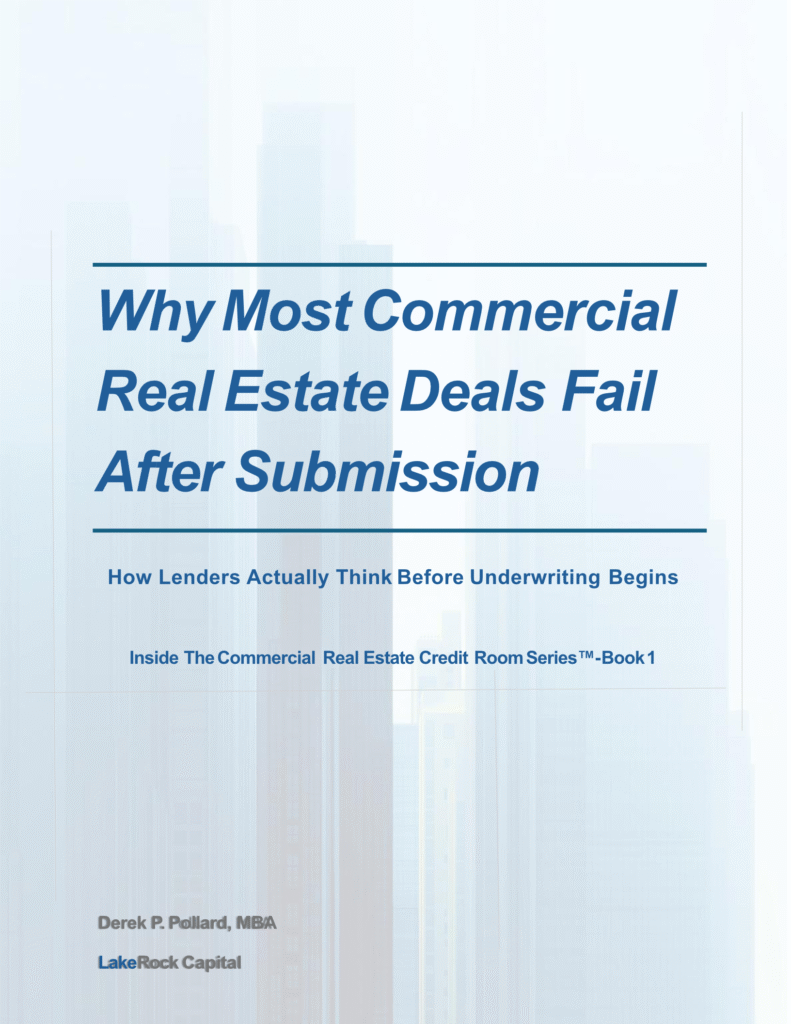
Understand the submission-stage gaps that cause deals to stall, re-trade, or fail before lender confidence fully forms.
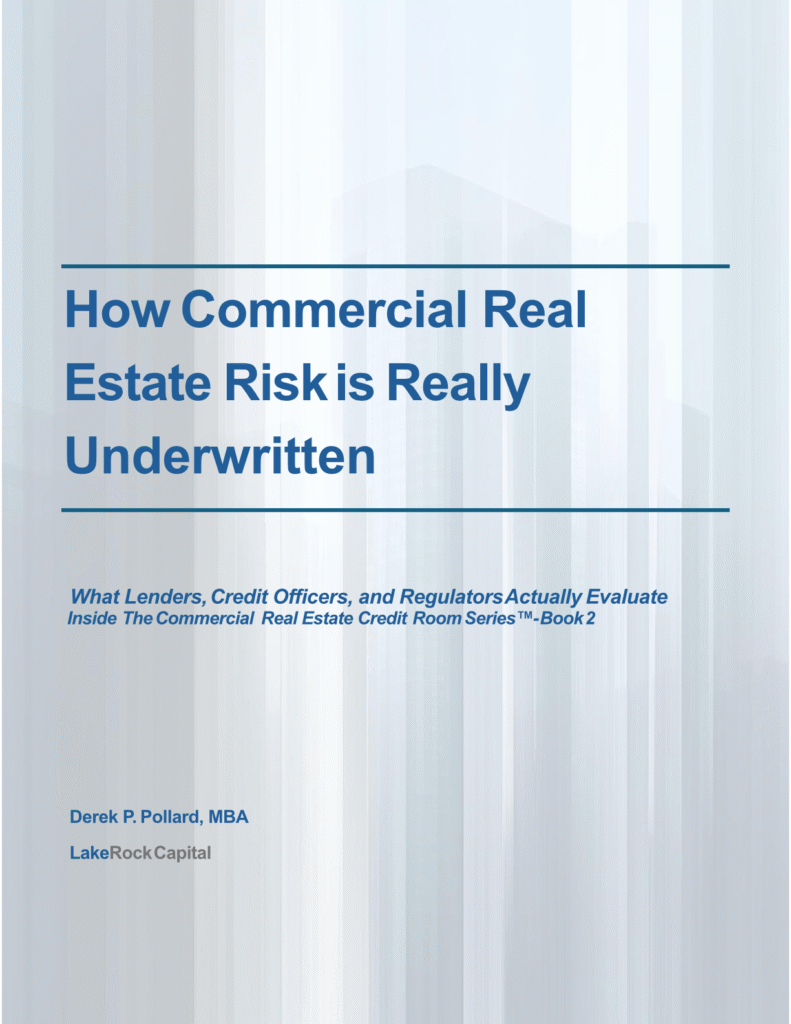
How Commercial Real Estate Risk Is Really Underwritten
Learn how lenders evaluate cash flow, collateral, sponsorship, structure, repayment risk, and downside exposure.
Unpublished
Preview
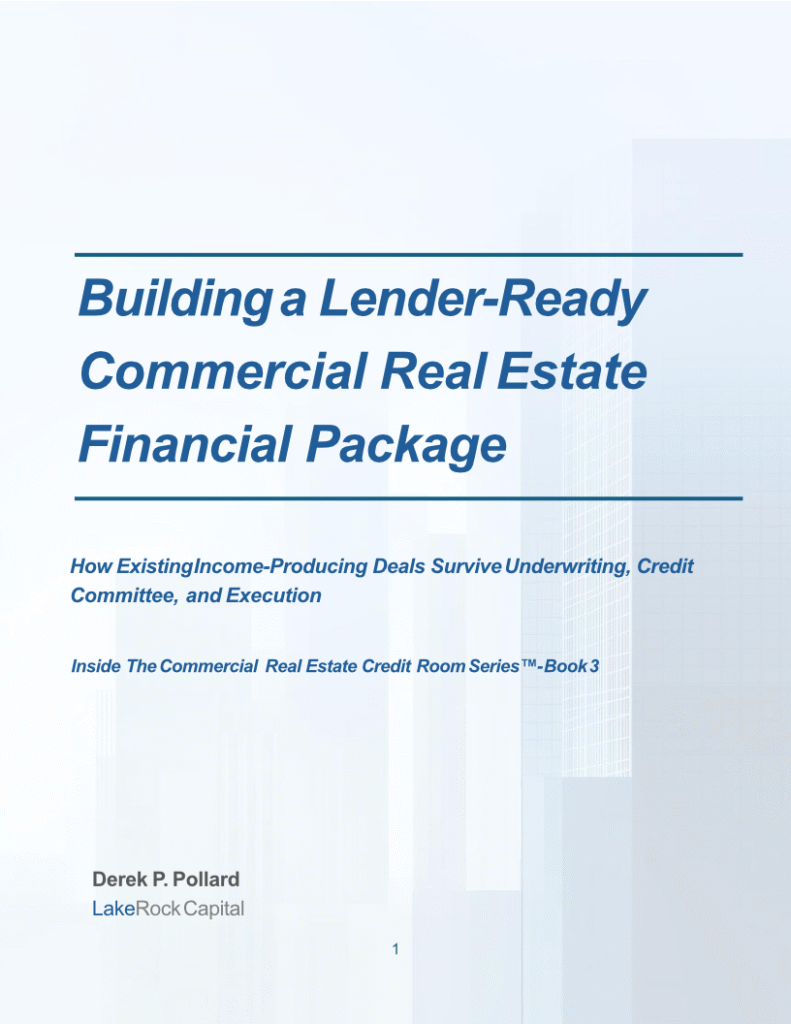
Building a Lender-Ready Commercial Real Estate Financial Package
Prepare operating statements, rent rolls, debt schedules, assumptions, and support materials lenders need to underwrite with confidence.
Unpublished
Preview
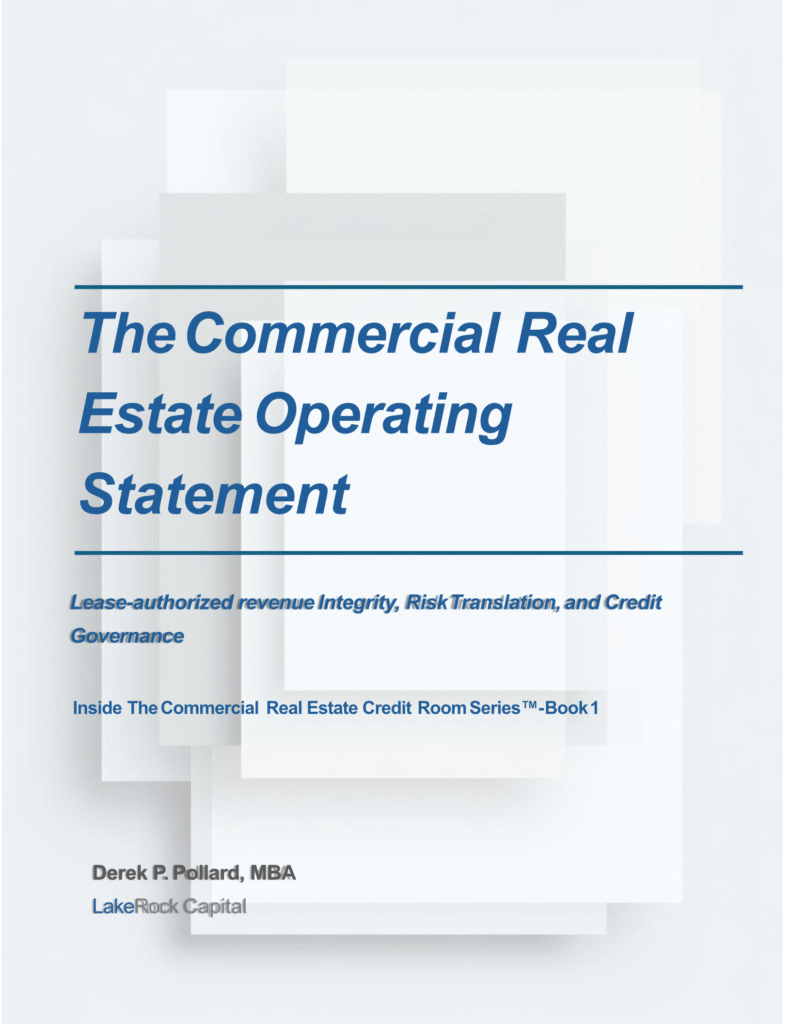
The Commercial Real Estate Operating Statement
How lenders and credit officers turn operating statements into normalized NOI, DSCR, value, and credit confidence.
Unpublished
Preview
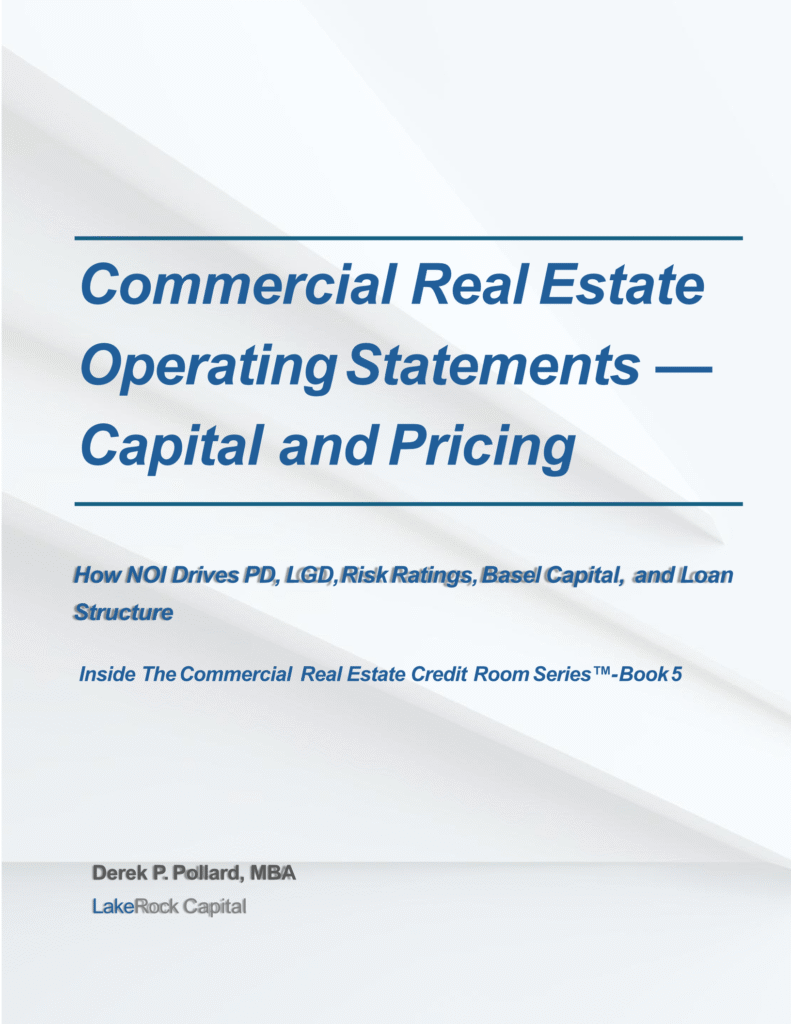
Commercial Real Estate Operating Statements — Capital and Pricing
How operating statements drive NOI, risk ratings, Basel capital, pricing, loan structure, and monitoring decisions.
Unpublished
Preview
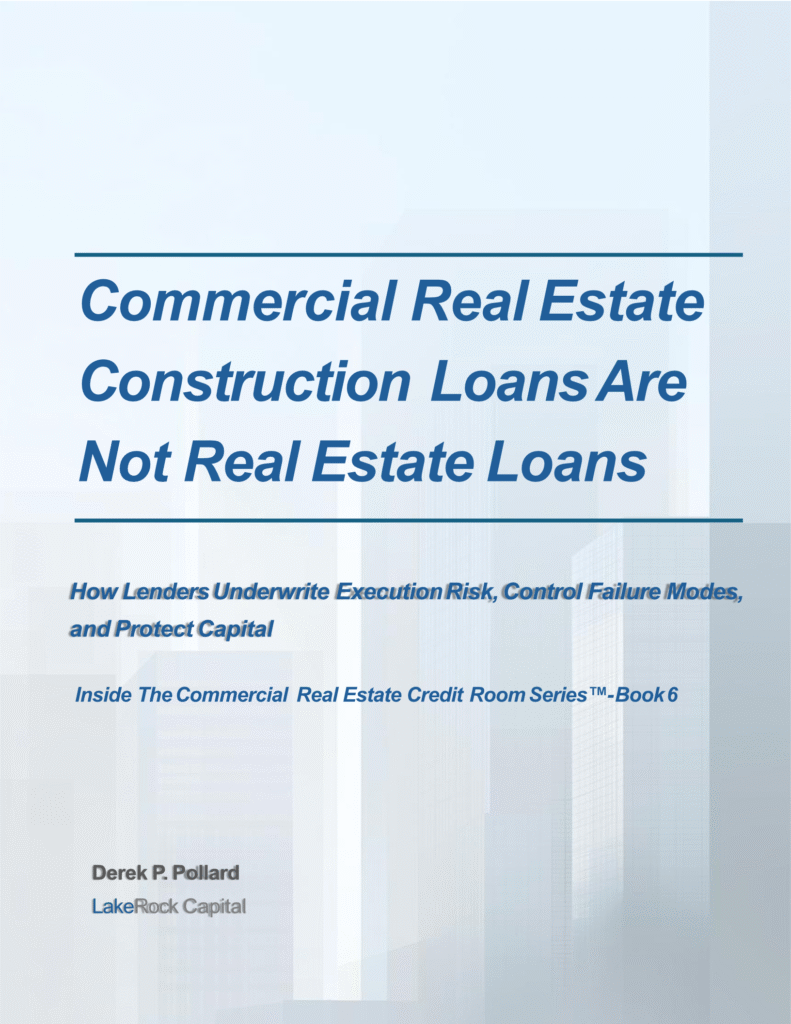
Commercial Real Estate Construction Loans Are Not Real Estate Loans
How lenders underwrite construction risk, sponsor execution, draw controls, completion risk, and takeout uncertainty.
Unpublished
Preview
How lending decisions are actually formed — not how they’re described
Built from Inside the Credit Decision Process
This framework reflects how commercial real estate transactions are actually evaluated inside financial institutions — shaped by experience in lending, credit risk management, and regulatory review.
Why LakeRock
- Proven CRE Expertise – 30+ years across lending, development advisory, and risk.
- Regulatory Insight – Examiner-level precision in compliance and governance.
- Data-Driven Decisioning – Market intelligence, feasibility modeling, and AI-enabled analytics.
- Risk-Savvy Execution – Structures that protect capital while preserving flexibility.

Disclosure: Real estate investments involve risk, including loss of principal. Information is educational and not an offer to sell securities.